




About
Mona Sata is a B2B content and narrative specialist with experience in cloud-native and security technology. She translates complex concepts into clear messaging that helps technical teams communicate with authority and earn buyer trust.
Usually writes about
Related posts

RBAC vs ABAC vs PBAC: The Complete Guide to Access Control
RBAC, ABAC, and PBAC are the three primary access control models organizations use to govern who can access what. RBAC is simple and role-driven. ABAC is dynamic and context-aware. PBAC centralizes access logic into organization-wide policies. Most mature organizations layer all three rather than relying on one model alone. Choosing the wrong model, or inheriting one without evaluating it, creates security gaps that compound silently over time. In environments where shared devices and rotating workforces are the norm, the stakes of that decision are even higher.

What is POS Security? The Complete Guide for Businesses
POS security protects payment systems from data breaches, malware, and fraud across devices, networks, and users. POS systems are prime targets because they handle sensitive data like card details and transaction histories in real time. Most attacks exploit weak authentication, unpatched systems, or compromised third-party access. Effective security requires layered controls such as encryption, MFA, network segmentation, and strict access control. While PCI DSS sets the baseline, true protection comes from going beyond compliance with stronger access management and continuous monitoring.

Policy-Based Access Control (PBAC): How It Works and Why It Matters
Policy-based access control is a dynamic authorization model that governs access through centrally defined policies combining user roles, resource attributes, actions, and environmental context. Unlike RBAC, which assigns permissions at the role level, PBAC evaluates every access request in real time against the full context of who is asking, what they want, and under what conditions. While PBAC delivers significant gains in security, auditability, and compliance alignment, it requires disciplined policy governance and careful testing before rollout.

SAML vs OIDC: What Actually Matters Beyond the Protocols
SAML and OIDC are both widely used authentication protocols for enabling single sign-on (SSO), but they differ significantly in architecture, usability, and modern applicability. SAML is XML-based and commonly used in enterprise and legacy systems, while OIDC is built on OAuth 2.0 and designed for modern web and mobile applications. OIDC offers simpler integrations, better performance, and improved developer experience, making it the preferred choice for new applications. However, SAML remains relevant in enterprise environments with established identity infrastructure.
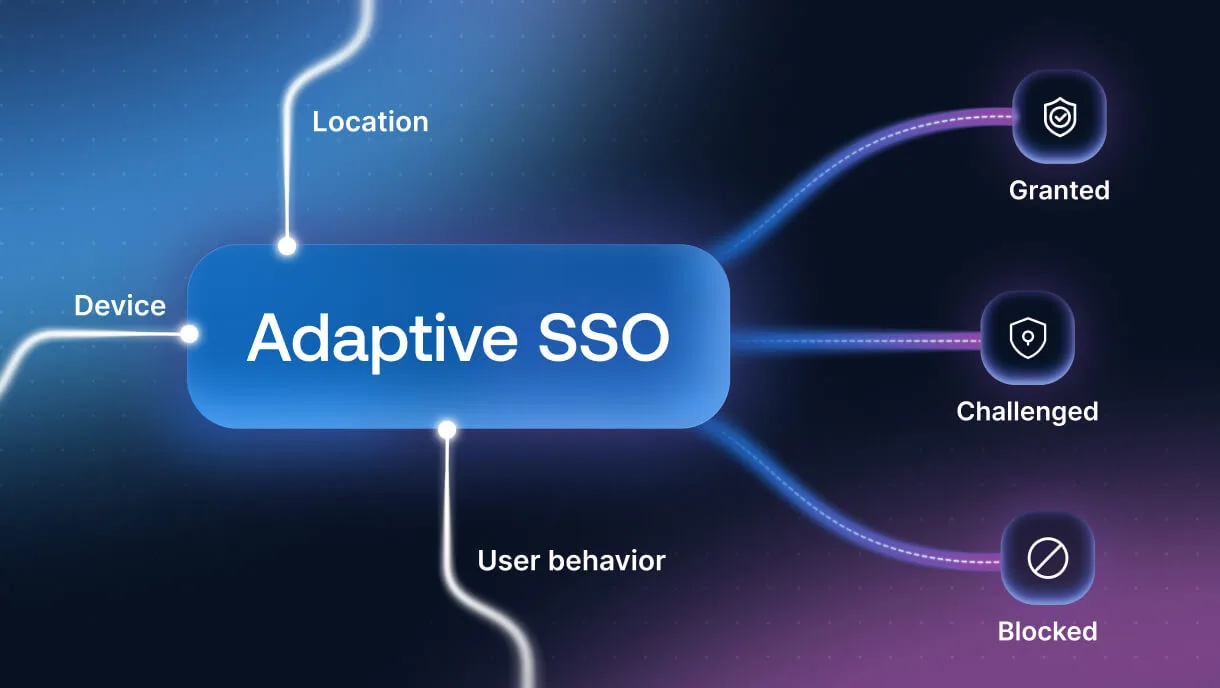
Adaptive SSO: Benefits, Limitations, and Where It Falls Short
Adaptive SSO enhances traditional single sign-on by introducing contextual and risk-based decision-making into authentication workflows. Instead of relying on a one-time login, it evaluates factors such as device, location, and user behavior to determine whether access should be granted, challenged, or blocked. This approach improves access control while reducing unnecessary authentication friction. However, adaptive SSO still depends on assumptions about device trust and session continuity, which may not hold in environments with shared systems or dynamic user behavior.

Adaptive MFA Explained: How It Works and Why It Fails in Shared Environments
Adaptive multi-factor authentication adjusts authentication requirements based on risk, context, and user behavior to ensure stronger authentication without adding unnecessary friction for users. Instead of relying on static rules, it evaluates each authentication attempt in real-time and dynamically applies additional authentication steps only when needed. This approach helps verify a user’s identity more accurately while maintaining security and convenience across environments. As identity becomes more fluid, adaptive MFA enhances how organizations balance security requirements and user experience.

Making every day-in-the-life of frontline workers frictionless & secure!
Get the latest updates! Subscribe now!
Thank you! Your submission has been received!
Oops! Something went wrong while submitting the form.
